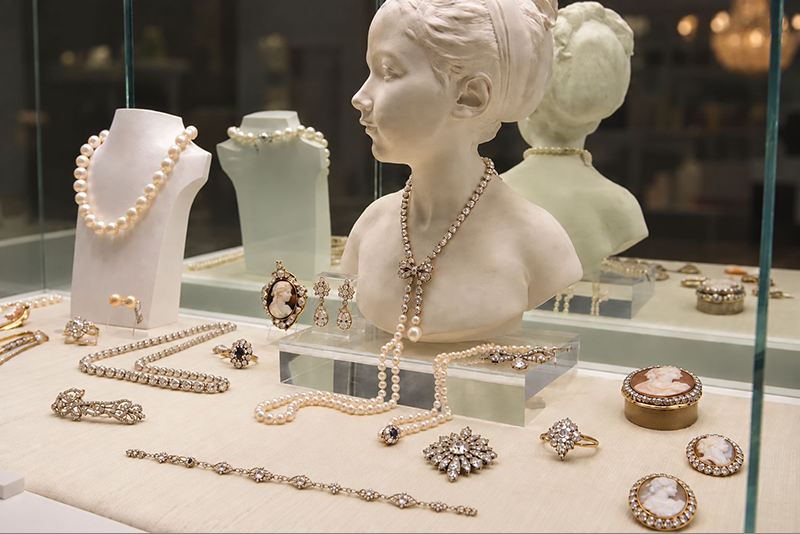
People looking to buy pre-owned diamond jewellery often choose a piece with a history for reasons that go beyond financial considerations. More and more buyers are prioritising sustainability, high-quality materials and timeless designs. Second-hand diamond jewellery is a wonderful solution in this regard.
In this article, we explain the advantages of the second-hand market and help you make the right purchasing decision.
Pre-owned diamond jewellery as a sustainable option
What is marketed as sustainable diamond jewellery is not necessarily conflict-free, nor does it necessarily mean that the diamonds or precious metals used have been sourced and produced in accordance with current sustainability standards. Unfortunately, greenwashing also plays a major role in the jewellery sector.
It is therefore particularly resource-efficient to continue wearing jewellery you already own. As an alternative, you can buy second-hand diamond jewellery and extend the life cycle of high-quality materials whilst reducing the need for the extraction of new raw materials.
The mining of gold and gemstones, in particular, involves high energy and resource consumption and can cause significant disruption to nature and the environment. By buying pre-owned jewellery, precious metals and gemstones remain within the recycling cycle and intricately crafted pieces of jewellery are used for the long term.
Promoting circular economy
The transition from a disposal-based economy to a circular economy was officially completed in Germany in 1972 with the enactment of the Waste Disposal Act. Since then, the concept of sustainability has also come increasingly to the fore in society.
Buying jewellery on the secondary market therefore represents a conscious decision to act in an environmentally responsible manner, not only in everyday life but also when purchasing luxury goods, whilst at the same time avoiding the unnecessary depletion of limited, finite resources.
Gold as a key raw material – environmental impacts and the role of recycling
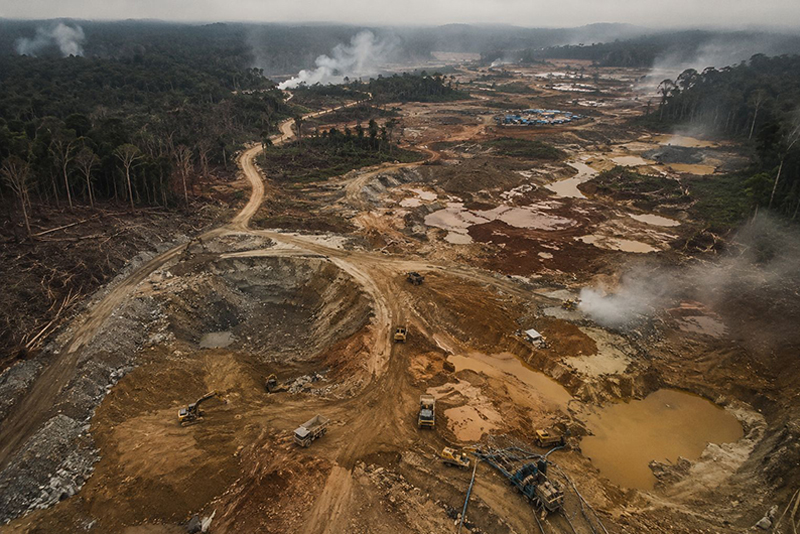
The crafting of gold into jewellery dates back to ancient times, as the metal was already prized then for its rarity, beauty and resistance to corrosion. Today, it also plays a major role in the financial and technology sectors, where it serves as a store of value or is used in the manufacture of contacts and semiconductors in technical devices. It is often forgotten, however, that gold is a finite resource and just how damaging its extraction is to the environment and human health.
To extract gold, toxic chemicals – in particular mercury – must be used so that the extracted gold can be bound and separated from the surrounding materials. Mercury vapours can be released into the air during this process, whilst liquid residues of the metal seep into the soil and waterways. The logical consequence of this process is the contamination of vast tracts of land with pollutants, which can enter the food chain via local wildlife and thus also end up in the human body.
Last but not least, forests and even local settlements often have to make way for gold mining. Poor working conditions and a lack of safety measures are further critical factors.
Gold Recycling and its possibilities
In order to counteract this disastrous trend and prevent further harm to people and the environment, the recycling of gold is now being promoted more and more vigorously. Owing to ongoing digitalisation alone, the demand for gold is likely to increase rather than decrease in the future. Recycling scrap gold offers a solution to this problem. Precious metals from existing jewellery and electronic waste can now be melted down at refineries and returned to circulation in their purest form. Many German refineries are also increasingly operating in a carbon-neutral manner.
A major advantage is that gold can be recycled time and time again without any loss of quality, and only very minimal material loss is to be expected.
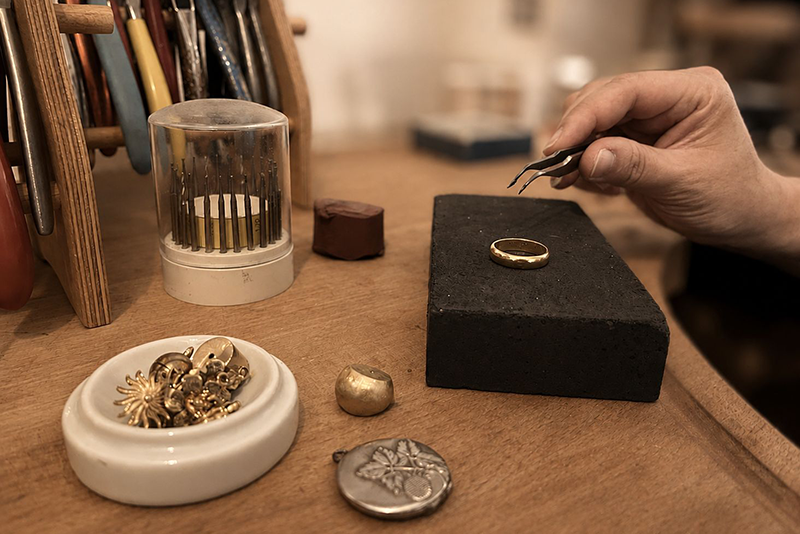
Our tip: As a private individual, you should definitely consider having old or inherited jewellery processed or melted down at a goldsmith’s and turned into something new!
Lab-grown diamonds as a ‘green’ option?
Diamond mining is also not without its problems and is associated with ecological and human rights consequences, some of which are serious. In 2003, therefore, the Kimberley Process came into force – an international certification system designed to curb the trade in conflict diamonds (‘blood diamonds’).
At first glance, lab-grown diamonds also appear to offer a solution to the drawbacks of diamond mining. However, one must not be blinded by their supposed advantages! One particularly serious drawback is that synthetic diamonds have virtually no resale value! You should therefore think very carefully before investing in lab-grown diamonds.
It is also important to note that the production of lab-grown diamonds requires an enormous amount of energy. The carbon footprint of synthetic diamonds can therefore be many times higher than that of natural diamond mining when conventional, fossil fuel-based energy sources are used – as is predominantly the case in China and India (the world’s largest producers of synthetic diamonds). Only the exclusive use of electricity from renewable energy sources would remedy this situation.
Furthermore, the construction of large ‘diamond factories’ results in vast areas of land being sealed off, thereby restricting the biodiversity of these regions.
Buying second-hand diamond jewellery and checking it step by step
Anyone looking to buy pre-owned diamond jewellery should bear in mind a few tips that will help them to realistically assess the quality, the likelihood of the piece retaining its value, and any potential repair costs.
Step 1: Check the overall impression
First of all, get an overall impression. Are there any major scratches, dents or obvious repairs? Normal signs of wear and tear are common in older pieces of jewellery, but severe damage may require restoration at a later date.
Step 2: Check the settings
A setting is designed to secure the diamond or gemstone permanently within the piece of jewellery. You should therefore check whether the stone moves when the jewellery is moved or tapped lightly. You should also check whether the settings are visibly bent or heavily worn.
If you intend to wear the piece regularly, or even every day, it is all the more important that the stones are securely set. Simply speak to the sales assistant about this and ask for direct information about the condition of the item.
Step 3: Take a close look at the diamonds
Even second-hand diamond jewellery should be sold with details of the stones’ quality. If this is not the case, do not hesitate to ask the retailer for further information. Even on the second-hand market, diamonds should therefore have been examined under a 10x magnifying glass and graded according to the 4 Cs (Carat, Colour, Clarity, Cut).
As a buyer, you may sometimes be able to spot chips or damage to the stone with the naked eye, and you should definitely look out for these.
Step 4: Check the precious metal and hallmarks
Check for any hallmarks and the fineness of the jewellery. Common gold finenesses are 333, 375, 585 and 750. Additional maker’s marks or manufacturer’s hallmarks may provide clues as to the item’s origins and are of particular interest in the case of antique jewellery. Also look out for areas of the item that have been heavily worn, such as connecting parts and hinges.
Important: High-quality, genuine jewellery is not always hallmarked, as there was no international obligation to mark fineness in the past! The experts at Halsbandaffaire will be happy to help you verify the authenticity of jewellery that is not hallmarked.
Step 5: Compare documents
If you are buying pre-owned diamond jewellery, particularly from private individuals, you should enquire whether original invoices, certificates from appraisers or testing laboratories, and any previous or current valuation reports are available, and whether these correspond to the actual item. If the details regarding the precious metal, the number of stones and the weight are correct, this enhances traceability and also builds trust when buying second-hand.
Step 6: Expert assessment in case of doubt
If the sale price is high and you have any doubts about the jewellery and/or the seller, you can seek advice from an independent jeweller or expert. Please feel free to make an appointment at Halsbandaffaire if you are unsure. Our team of art historians, appraisers and gemmologists will be happy to advise you.
Market characteristics and limitations when buying pre-owned goods
You are now aware of a few key points that should give you peace of mind if you are thinking of buying pre-owned diamond jewellery. When dealing with official online retailers, you should also pay attention to customer reviews. It is also worth clarifying before making a purchase what documentation comes with the piece of jewellery. For example, are there certificates of authenticity issued by the retailer that may be verifiable at a later date?
You should also ask yourself the following questions: Are statutory warranty periods being observed? Are there any options to withdraw from the purchase, and are you granted your statutory right of return? Can you contact the seller directly, and are your questions answered satisfactorily?
Important: When buying second-hand diamond jewellery, particularly from private individuals, a guarantee or liability for material defects is often excluded!
Information on the origin of diamonds
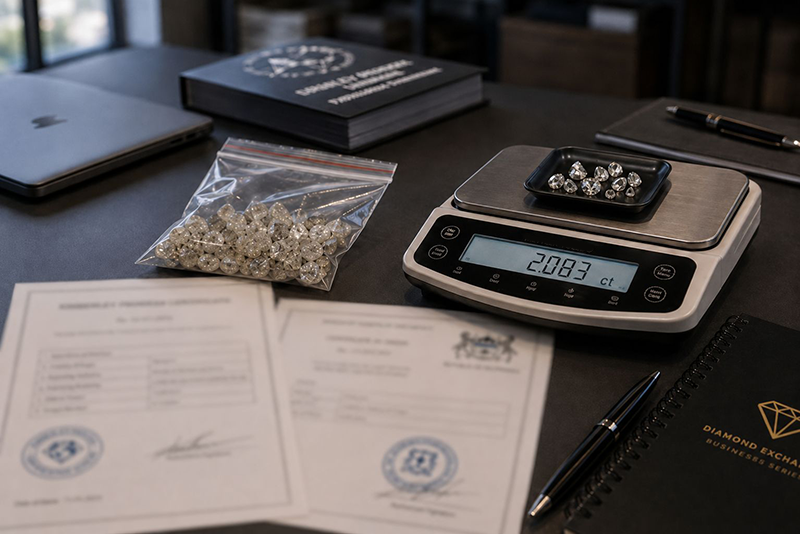
You should not expect too much when it comes to information about the origin of diamonds in vintage and antique jewellery. The fact is that a diamond that has already been cut cannot be traced back to a particular country of origin, let alone a specific mine. Kimberley Certificates have only been in existence since the 21st century and can therefore only be applied to and issued for newly mined rough diamonds.
However, as the development of diamond cuts is historically documented, it is at least possible to place them within a specific time frame. For example, a brilliant-cut diamond can never date from the 18th or 19th century, as this cut was not developed until 1919. So, if you are familiar with the development of diamond cuts, you will be better able to assess and verify the date given by the jeweller for a piece of historical jewellery!
Care and restoration of pre-owned diamond jewellery
We have already explained how to clean diamond jewellery at home in our article ‘How to clean diamond jewellery’. If settings are damaged, stones have come loose or parts of the piece have even broken off, restoration should only be carried out by an experienced goldsmith. The guiding principle here is to preserve as much of the original material as possible and to replace only as much as is necessary.
Please do not hesitate to contact us in such cases. We will do our utmost to preserve your diamond jewellery for as long as possible and advise you on possible repairs.
A unique piece of history rather than ‘fast jewellery’
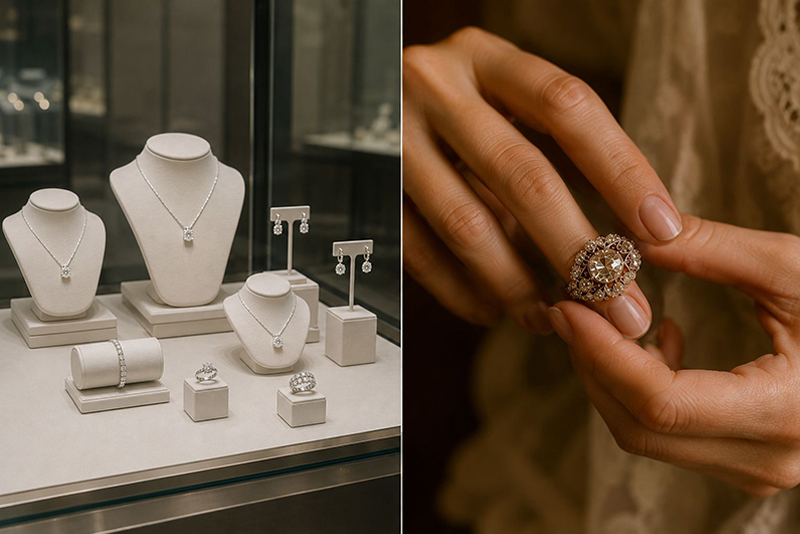
Anyone looking to buy pre-owned diamond jewellery associates sustainability with quality, and individuality with retaining value. Sustainable diamond jewellery is created, in particular, when you learn to appreciate existing pieces, pass them down through the generations, or have them reworked by a goldsmith into your very own ‘new’ favourite piece.
Buying vintage and antique jewellery also offers the opportunity to acquire exceptional pieces without having to draw on new resources, as existing precious metals and diamonds are preserved, as is historic craftsmanship. At the same time, it is all the more important on the second-hand market to check the condition and any accompanying documentation, and not to hesitate to contact the dealer if you have any questions. This is the only way to make a safe purchasing decision.
So, anyone wishing to buy second-hand diamond jewellery should always rely on reputable specialist retailers who can demonstrate professional training and provide their customers with transparent information. The Halsbandaffaire’s range, for example, is curated by art historians, experts and appraisers, and every item is carefully examined from both a gemmological and historical perspective.