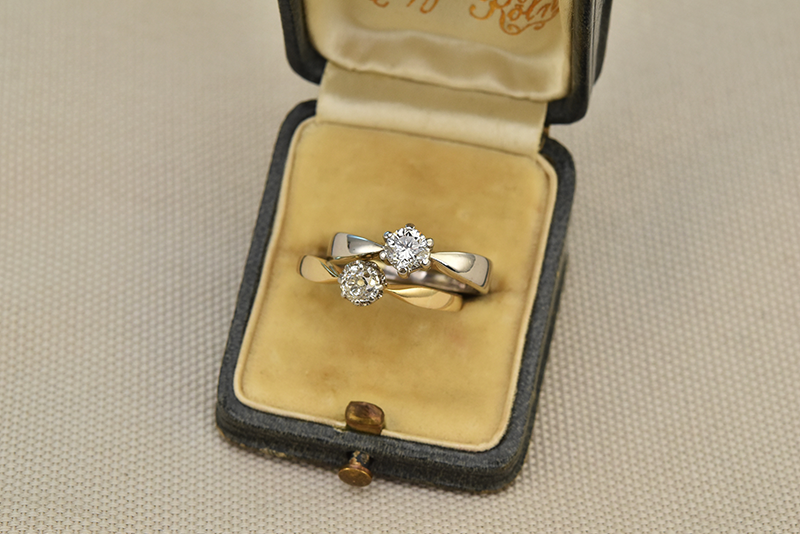
If you place an antique ring next to a modern solitaire ring, you’ll quickly notice that both sparkle – but in their own unique way. This is precisely what distinguishes Old European Cut diamonds from brilliant-cut diamonds: they are the same gemstone, yet their cut, play of light, historical significance and market price differ significantly. In our guide, you will learn what distinguishes Old European Cuts from brilliant cuts, how they appear visually, and which cut suits which style.
What is an Old European Cut diamond?
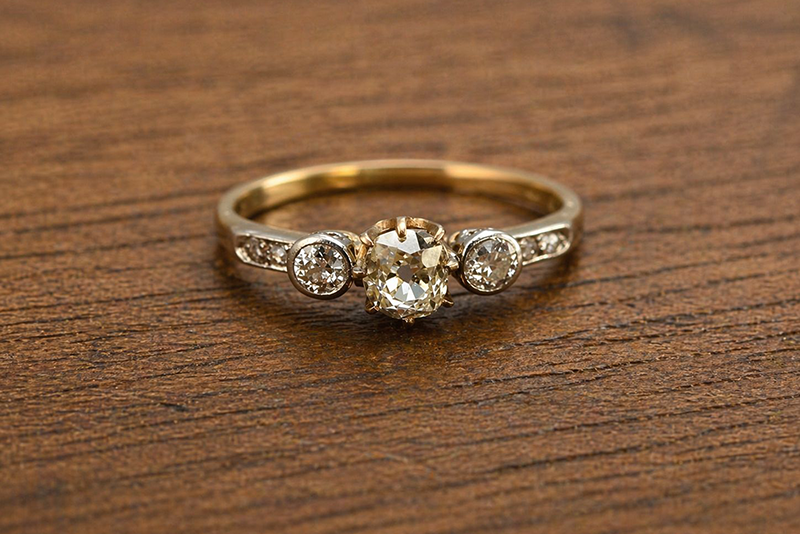
The Old European Cut refers to a historical cut, which was developed in the 19th century from its predecessor, the Old Mine Cut, and is now regarded as the precursor to the modern brilliant cut. Old European Cuts were optimised for candlelight and gaslight and are based more on the natural rough crystal than on mathematically calculated ideal proportions.
Typical features include a slightly higher crown, a smaller table and a visible, flat tip (culet) that can be seen through the table. The facets appear larger, and the outline is rather rounded or slightly cushion-shaped. Old European Cut diamonds often display a soft, deep sparkle with pronounced dispersion – less glittery, but very atmospheric. Every stone is a unique piece.
What characterises the brilliant cut?
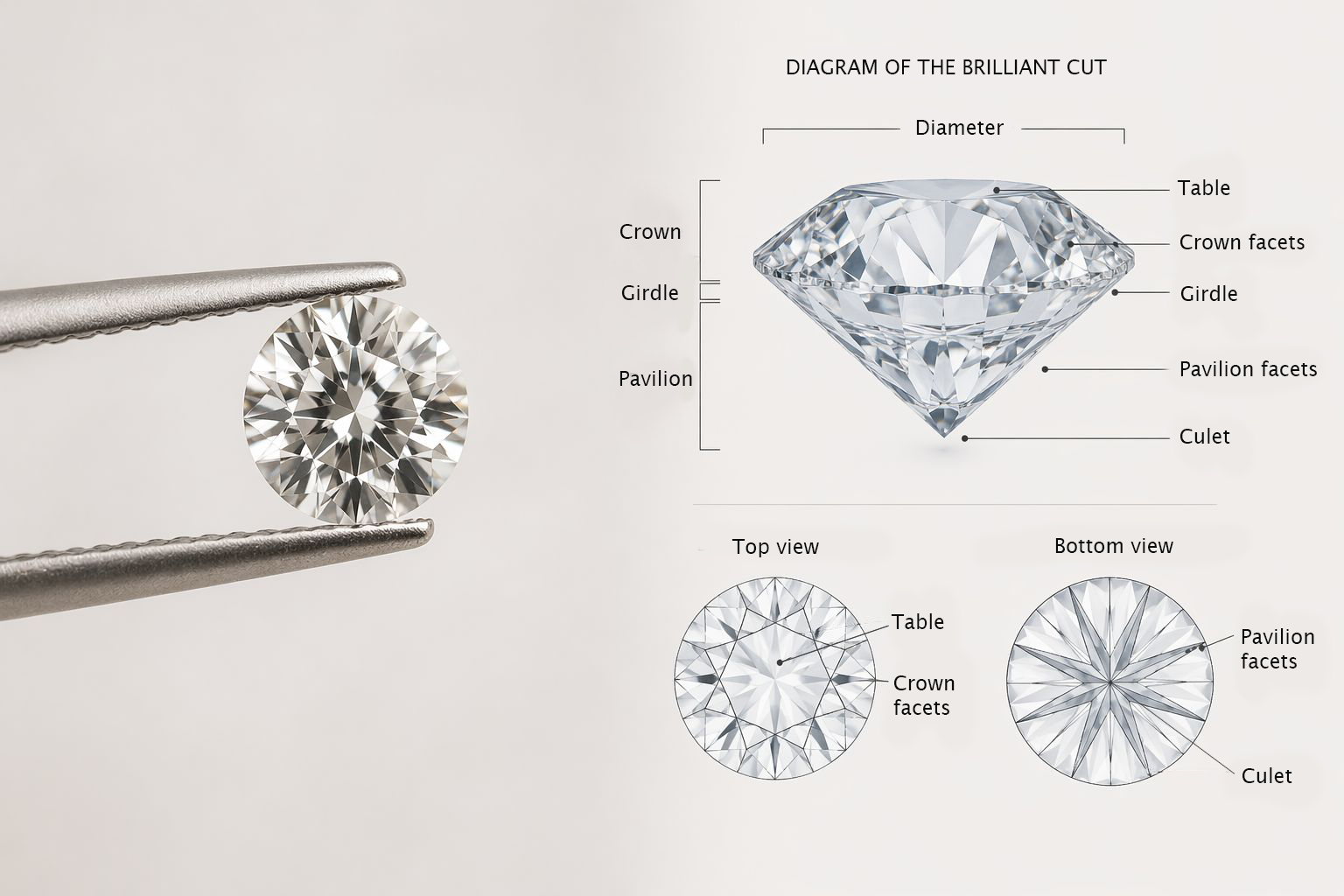
The brilliant cut is the round cut for diamonds commonly used today. It was developed in the 20th century based on optical and physical properties and calculated mathematically to reflect the incident light as efficiently as possible.
A brilliant-cut diamond has 57 facets (and possibly an additional culet at the base), a larger table and standardised proportions. Modern cutting techniques ensure that the shape and facet pattern are very regular. The result: a consistent, lively sparkle that reliably shines under a wide variety of light sources – from office lighting to dinner in a restaurant.
Old European Cut and brilliant-cut diamonds – the key difference
The decisive difference lies in the aesthetics of the cut:
• An Old European Cut diamond has a rather picturesque appearance. The light refracts across larger surfaces, the sparkle is lively and unique, and the centre of the stone appears deeper. Small asymmetries are part of its character and make the stone appear alive.
• A brilliant-cut diamond is cut for maximum light yield. The sparkle appears finer, denser and more vibrant. Its round shape and symmetry create a very clear, modern look.
In short: antique cuts tell a story, while brilliant cuts embody technical perfection. If you specifically buy antique jewellery, you will mainly find Old European Cut diamonds – whereas the brilliant cut dominates in new diamond jewellery.
Price and value: Old European Cut vs. modern brilliant
In today’s diamond trade, brilliant-cut diamonds are considered the standard. When of comparable quality, they are often valued the highest because they are in high demand – particularly for engagement rings.
Antique-cut diamonds may initially appear cheaper per carat, especially as loose stones. However, when considering historical jewellery pieces in their original settings, the picture changes: well-preserved rings, pendants or necklaces featuring authentic Old European Cut diamonds have become rarer and continue to enjoy unbroken popularity amongst connoisseurs.
Whether a diamond with an Old European Cut or a brilliant cut is more valuable, therefore always depends on the individual piece – on the well-known 4Cs (carat, colour, clarity, cut), on the era and design, as well as on its condition. General statements that one cut is fundamentally more valuable than the other fall short.
Which one suits me: Old European Cut or brilliant cut?
If you cannot decide between an Old European Cut and a brilliant cut – in addition to our expert in-store advice – the question of your personal style will help you more than any theory.
• For clear, timeless sparkle in everyday life, the brilliant cut is ideal. A solitaire, hoop earrings or a delicate diamond pendant with brilliant-cut diamonds blends effortlessly into a variety of outfits – from office wear to evening wear.
• For lovers of history and antiques, an Old European Cut diamond offers exactly what modern mass-produced items often cannot: individual proportions, a softer, romantic play of light and the charm of a genuine historical piece that tells a unique story.
Inspection and authenticity of brilliant-cut and Old European Cut diamonds
Thr cut of a stone can be easily identified with a loupe: Old European Cut diamonds feature a higher crown, a smaller table and a visible flat culet. Modern brilliant-cut diamonds appear orderly and regular. If you are unsure, an expert assessment can help – particularly if you wish to classify an inherited piece or a special find.
The essentials of Old European Cut vs. brilliant cut in brief
The difference between Old European Cut and brilliant cuts lies solely in the cut, not in the gemstone. Old-cut diamonds represent historical craftsmanship, candlelight and stones with individual character – whilst brilliant cuts stand for optimised proportions and a modern, uniform sparkle.
Which cut suits you best is a purely subjective decision, depending on whether you are more drawn to historical ambience or to clear brilliance. In our selection of diamond jewellery, you can experience this difference first-hand – and choose the piece of jewellery that will accompany you for years to come.