A diamond’s cut plays a decisive role in its appearance: it determines whether the diamond sparkles vividly, shines with clarity and calm, or displays soft, almost poetic reflections. If you know how to distinguish between diamond cuts, you will realise that it is not just the size of the gemstone that counts, but also its effect.
In our guide, we explain which cuts are most common in diamond jewellery, what defines a cut, and what to look out for when making your selection.
Cut, shape, facets – how to read a diamond
In everyday life, the diamond cut is often confused with its shape. However, the shape refers only to the outline of the stone: round, oval, cushion, rectangular or heart-shaped. The cut, however, describes how its surface has been worked, i.e. into how many polished surfaces (facets) the diamond is divided and how these direct the light. The alignment of the facets and their interaction therefore significantly influence the stone’s brilliance.
To help you classify different cuts and the structure of a diamond more easily, it is useful to understand its structure:
• The upper part of a diamond is called the crown .
• The table is the larger, central facet in the upper part of the gemstone.
• The girdle is the narrow “belt” around the centre of the stone, its “equator”.
• The lower section is known as the pavilion .
A good cut balances these areas so that the diamond appears bright, lively and harmonious.
A brief look back – why historical cuts look different
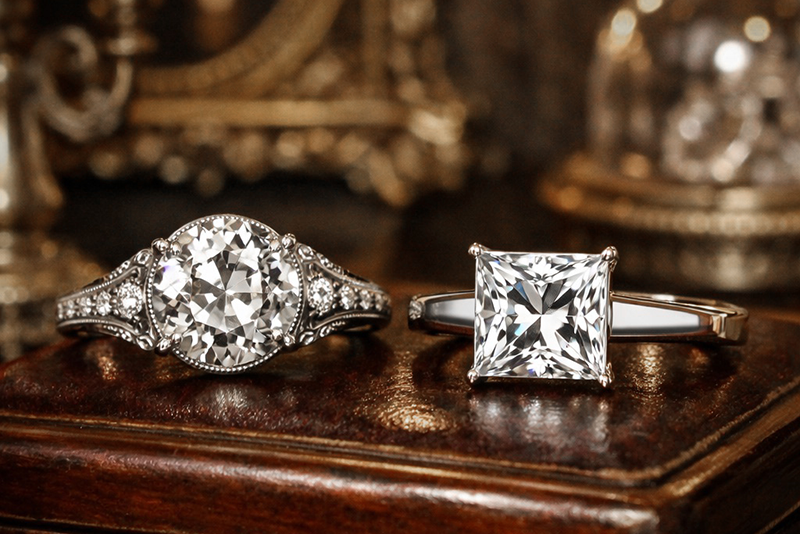
Historical cuts originated at a time when jewellery was often worn by candlelight or gaslight and diamond-cutting techniques were still in their infancy. This is why rose cuts and Old European Cuts in antique jewellery often appear softer, with larger light-reflecting surfaces and fewer reflections.
Modern cuts – above all the brilliant cut – are designed more to reflect as much light as possible. This explains why antique diamonds sometimes appear more subdued, without being any less fascinating.
The main types of cut and their effect
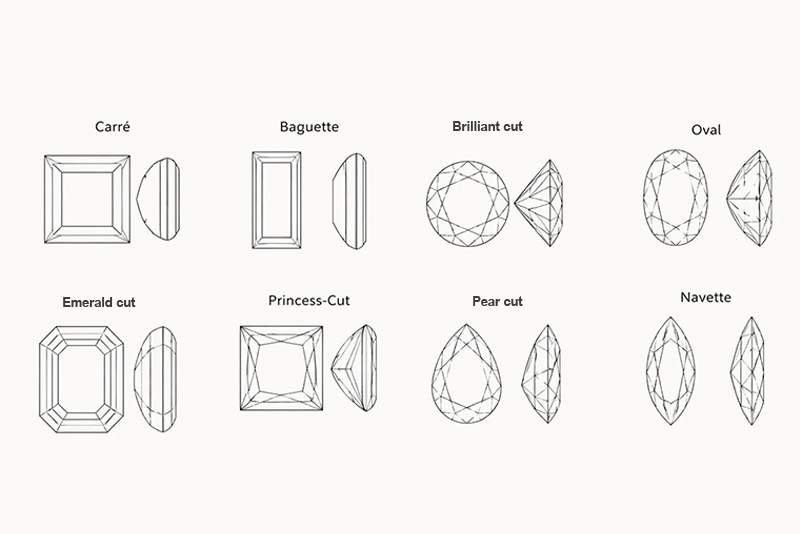
Understanding the different types of cuts transforms a spontaneous “I like it” into a conscious decision. The main variants can be divided into a few broad groups, each with a distinct effect.
Brilliant cut
The round brilliant is the best-known diamond cut – and for good reason: Its facets are arranged in such a way that light is reflected back in its entirety – that is, completely. The result is a lively sparkle with many small flashes of light. The brilliant cut appears clear and radiant and is at home in almost any style of jewellery – from understated to glamorous.
Modified brilliant cuts
It is not only round stones that can be cut as brilliants. Oval, cushion, pear or marquise-shaped diamonds are often facetted in such a way that they display a similar vibrancy to the round brilliant. The difference lies in the silhouette, which is always strongly influenced by the shape of the rough stone. This results in brilliant-cut navettes, brilliant-cut hearts or brilliant-cut teardrops.
Step cuts
Step cuts are characterised by elongated, step-like facets. Instead of many small flashes of light, they display larger, calm areas of light – like mirrors that absorb ambient light and reflect it back in an orderly manner. The emerald cut therefore appears particularly clear, modern and architectural. The Asscher cut, usually square, has a similar impact with striking geometry.
Expert tip: Colour and clarity often stand out more clearly in step cuts – a point to bear in mind when buying!
Mixed cuts and fancy cuts
Mixed cuts combine elements of the brilliant and step cuts. They often offer a lively sparkle, yet appear more graphic than a classic brilliant cut. Many modern cushion variants fall into this category, as does the radiant cut. If you like brilliance but are looking for a less classic look, mixed cuts are an exciting compromise.
Rose cut and Old European Cuts
Rose cuts are shaped like a small dome: flat on the underside, domed at the top and divided into triangular facets. Their light appears more delicate, often almost like a shimmer that settles over the surface.
Old European Cut diamonds – round or cushion-shaped depending on the style – often have a higher crown and a different – less perfect – facet pattern than modern brilliant-cut diamonds.
It is particularly in vintage and antique jewellery that these cuts reveal their charm: they appear extraordinary, sometimes gentler, almost narrative. Buying antique jewellery means embracing individuality: for Old European Cut diamonds rarely appear standardised, but all the more vibrant for it. Variations are also common here – and can be precisely what makes a piece unmistakable.
Shapes in everyday life – which silhouette suits you
Whilst the diamond cut determines the play of light, the shape defines its effect in the piece of jewellery: Round stones appear balanced and timeless; they blend effortlessly into many designs and styles. Marquise and oval cuts can create a slimming effect and often look particularly elegant on the hand. Rectangular shapes such as the emerald cut appear modern, crisp and confident. Heart shapes are distinctly more emotional and make a deliberate statement.
Ultimately, there is no right or wrong, only the question: should the stone take a back seat – or tell a story?
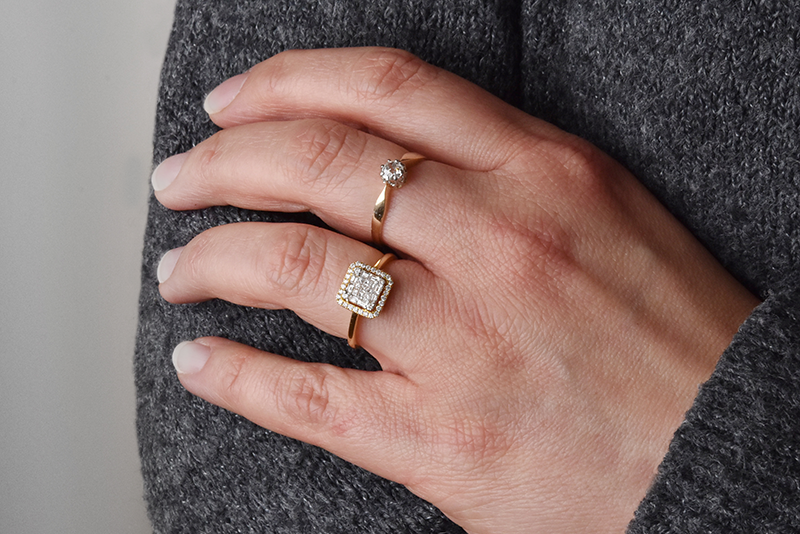
Diamond cuts: how to recognise quality
The cut quality is crucial to a diamond’s appearance. A diamond can have very good colour and clarity yet still appear dull if its proportions and facet pattern reflect light unfavourably.
When a diamond is graded by a specialist retailer, its cut is classified into the following quality grades: Excellent, Very Good, Good, Fair and Poor. You should also find these terms in the relevant certificates when making a purchase.
To ensure optimal light yield, the ideal proportions of the stone are now precisely calculated during the cutting process. This was not yet possible for diamonds from past centuries, which is why it is particularly important with antique jewellery that the shape and brilliance appear harmonious: Look for an even distribution of light (the stone should appear bright overall) and ensure that the contour is harmonious.
When viewing the piece – whether online or in-store – focus particularly on these points:
• Brightness and vibrancy: Does the stone appear bright overall, or are there conspicuously dark areas?
• Harmony of form: Are the curves and lines clean, and does the silhouette appear balanced?
• Symmetry of the facets: Does the pattern of facets appear orderly, not random? Pay particular attention to straight table edges.
• Proportions: A stone that is cut very deep or very flat cannot reflect light ideally and will never be able to realise its full potential.