Even a diamond can lose its shine – over time, skin oils, creams, soap residue and dust dull its brilliance, as they tend to accumulate particularly easily beneath the stone and within the setting. When cleaning diamond jewellery, the main aim is therefore to safely remove this fine film – without damaging the stone, metal or setting.
In our guide, we provide information on everyday cleaning methods, clear no-gos and tips for delicate cases.
Protect the diamond, preserve the setting
Many household cleaning products are too harsh for jewellery. They can attack the surface of the metal or weaken it over time. The Gemological Institute of America (GIA) therefore expressly advises against using abrasive household cleaners.
Also important: Residue rarely sits where it is immediately noticeable. Skin oils and soap residues usually accumulate behind the stone – on its underside and in the fine gaps of the setting. This is precisely where the light is “swallowed up”, and the diamond suddenly appears less sparkling. When cleaning it, do so gently but thoroughly: it is better to tackle the hard-to-reach areas with a mild solution and a soft brush rather than scrubbing the surface with harsh chemicals.
Cleaning properly at home – a step by step guide
Find a safe place to work: A bowl on the table is ideal – not the open sink. If this is absolutely necessary, block the drain so that any stones that might come loose do not end up in your drainpipe.
Here’s how to proceed:
1. Fill a bowl with lukewarm water and add a few drops of mild washing-up liquid.
2. Place your jewellery in the bowl for 5–10 minutes to allow grease and soap residues to dissolve (if necessary, the soaking time can be extended for heavily soiled items).
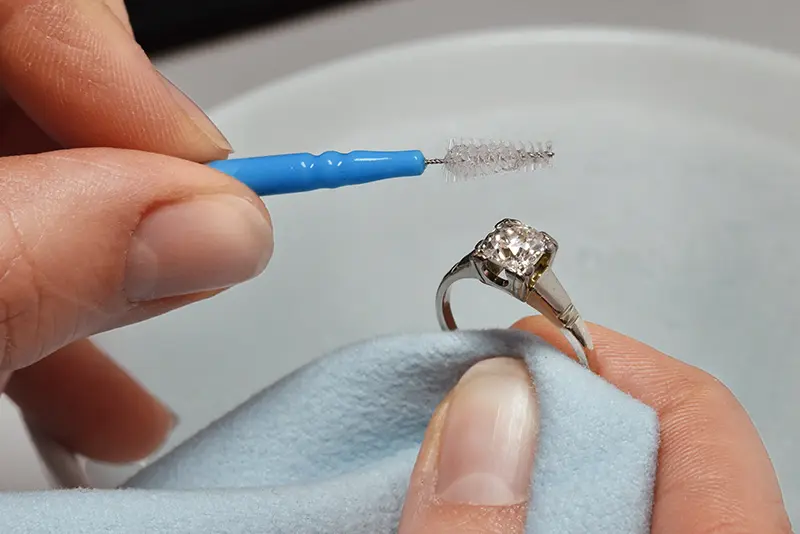
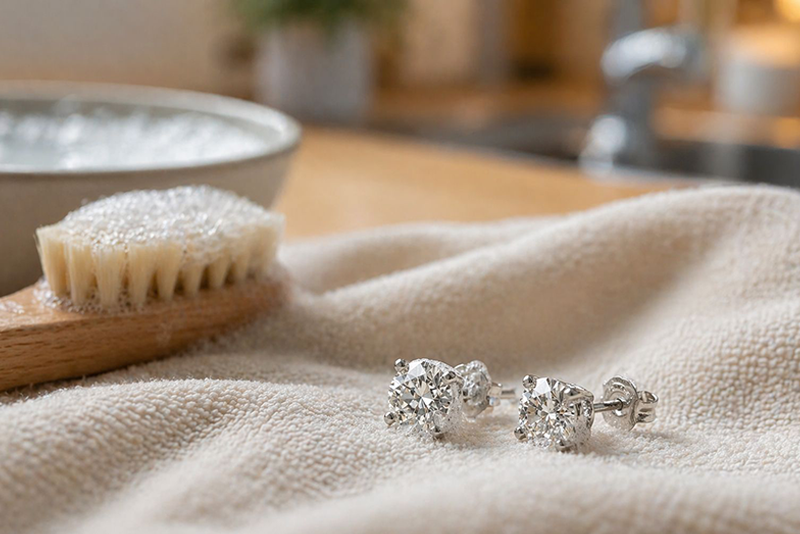
3. Brush with a soft brush (e.g. a baby toothbrush), focusing particularly on the underside of the diamond and the setting. Use only light pressure and short strokes. For heavier soiling, you can also use an electric toothbrush with a soft brush head. Interdental brushes are also very suitable for hard-to-reach areas.
4. Rinse thoroughly with lukewarm water to ensure no surfactants remain.
5. Pat the piece of jewellery dry and allow it to air dry before putting it back on.
These products are a no-go: common cleaning mistakes
Some home remedies seem convincing, but are a bad idea for jewellery.
Please avoid:
• Chlorine bleach / chlorine-based cleaners: can corrode metals and settings and weaken prongs.
• Scouring agents and toothpaste: these are abrasive, cause micro-scratches and can dull surfaces.
• Cleaning in the sink without securing: this carries risks of your jewellery falling in and getting lost, so be sure to secure the drain!
• Please only use an ultrasonic cleaner if your piece of jewellery is not set with other coloured gemstones, pearls, coral, etc. These usually cannot withstand the high-frequency vibrations of the device and may, in the worst case, shatter.
Safe cleaning for mixed gemstone jewellery: pearls, opals & co. in focus
Many pieces of jewellery do not consist solely of diamonds. As soon as pearls, opals or other delicate stones are involved, cleaning should always be tailored to the most delicate material. In such cases, a mild cleaning solution is often still an option, but brushing and soaking must be carried out with much greater care – ultrasonic cleaning is strictly off-limits in such instances.
Expert tip: If you are unsure exactly which stones are set, the safest recommendation is to have the item cleaned by a specialist workshop or jeweller, combined with a brief visual inspection.
Cleaning diamond jewellery with ultrasound: when it makes sense
Ultrasonic cleaning can dislodge dirt from fine crevices that are difficult to reach with a brush and cloth. The process works using high-frequency vibrations in a water bath – and that is precisely why it is not suitable for every piece of jewellery: If the setting is already old, worn or “frayed”, stones can quickly come loose.
This also applies to treated diamonds – such as fissure-filled stones (here, fine cracks are filled with a light-refracting substance) – or with naturally porous gemstones such as emeralds, you should avoid using an ultrasonic bath. So as soon as delicate materials are involved – particularly pearls, being an organic material – it is always wise to exercise caution.
In short: an ultrasonic cleaner should only be used on jewellery with a sturdy setting and non-delicate stones!
Professional diamond jewellery cleaning
It is advisable to have diamond jewellery professionally cleaned at regular intervals. Buying antique jewellery also means taking responsibility for the materials and craftsmanship – so gentle cleaning and regular checks are part of the process.
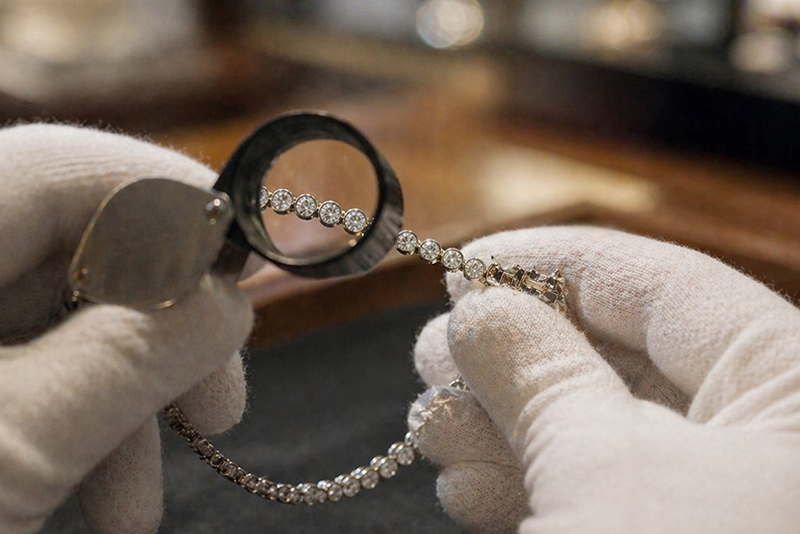
The underestimated benefit: a professional pays attention not only to cleanliness, but also to prongs, settings as well as wear and tear. Particularly for jewellery worn daily, this inspection is valuable before a stone comes loose unnoticed. This is also advisable even if you already look after your diamond jewellery regularly at home.
Day-to-day care: How to keep your jewellery clean for longer
Your diamond jewellery will stay clean and beautiful for a particularly long time if you adopt a few small habits in your daily routine. For example, you should remove your jewellery before showering, swimming or engaging in physically strenuous activities and store the pieces separately to prevent scratches. Jewellery should also not be worn whilst sleeping.
Tips for everyday life
If you wear your jewellery frequently, a quick cleaning routine works wonders: after wearing it, briefly wipe the diamond surface and setting with a soft, lint-free cloth. This removes oils before they set in and noticeably extends the time until the next wet cleaning.
This procedure is particularly worthwhile for diamond earrings and pendants: Although brushing them may be easier than with rings, make-up and perfume residues are often the hidden culprits that steal their shine.
Protect hallmarks and surfaces: preserving value through gentle care
Hallmarks and maker’s marks are part of your jewellery’s identity. Aggressive polishing or scrubbing with pressure can blur the contours over the years. You should therefore clean your diamond jewellery more frequently but gently – rather than infrequently and too vigorously.
The essentials of cleaning diamond jewellery
The most reliable method for cleaning diamond jewellery is a mild solution of lukewarm water, a short soaking time and gentle brushing. Avoid harsh cleaning agents, as they can damage surfaces.
Ultrasonic cleaning is only an option if the setting is secure and there are no delicate accent stones. Regular professional cleaning is also worthwhile, as this involves checking the fit of the stones.