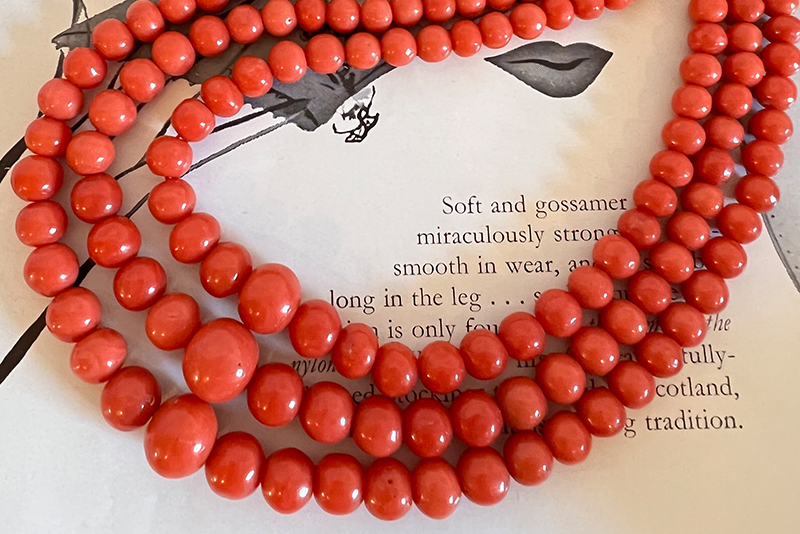
Coral jewellery captivates with its natural colour intensity and organic origins. However, it is precisely these qualities that require special care. In this article, you’ll find out how to clean, store and wear coral correctly.
The unique characteristics of coral
Coral belongs to the colony-forming cnidarians and is native to salt water. Through the deposition of calcium carbonate, it forms skeletons which, due to their natural beauty, have been crafted into jewellery for centuries. Coral is therefore one of the oldest and most fascinating materials in the history of jewellery.
The red Mediterranean coral (corallium rubrum) was particularly prized, captivating with its warm colour spectrum ranging from light rosé to intense dark red.
However, what distinguishes coral from other gemstones is its organic origin. Gemstones are of mineral origin and are therefore inorganic. Their formation process makes them comparatively hard and durable. Coral, on the other hand, has a maximum Mohs hardness of 4 and is therefore more susceptible to scratches, heat and acids, such as those found in perfume, sweat or cosmetics.
Without proper care, coral jewellery therefore quickly loses its lustre and can even suffer permanent damage. We’ll tell you how to avoid this.
Storing coral jewellery correctly
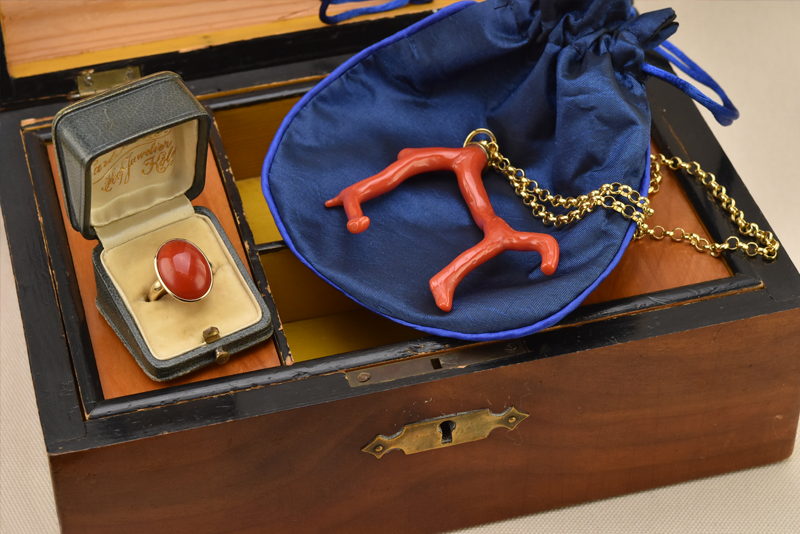
It is best to store jewellery containing coral separately. A dedicated compartment in a jewellery box or a small cloth pouch is sufficient. This prevents contact with other metals or gemstones and helps to avoid scratches.
Coral should also be protected from strong and prolonged exposure to light to preserve its colour. Here, too, a box or pouch is a simple solution. Storing it on open jewellery stands (near windows), on the other hand, is not recommended.
Wearing coral jewellery correctly
As with pearls, the following advice also applies to coral jewellery: it should be put on last and taken off first. This helps you avoid unnecessary contact with hairspray, perfume, lotions, creams and make-up.
Furthermore – as with other pieces of jewellery featuring gemstones – the rule is: never wear your coral jewellery whilst gardening, playing sport or at the beach, and also avoid wearing it whilst sleeping or in the shower or bath!
Cleaning coral jewellery – a step by step guide
Coral jewellery should be cleaned regularly, especially if it is worn frequently (and particularly in summer). This is because sweat and sun sreen can really dull its shine!
Here’s how to do it:
1. Use a bowl of lukewarm water and a soft brush (a baby’s toothbrush is best for this).
2. Clean the piece of jewellery with gentle movements and light pressure.
3. For heavy soiling, you may also use a mild soapy solution. However, be careful not to leave your coral jewellery “soaking” in it for too long.
4. The following must be avoided at all costs: chemical cleaning agents and ultrasonic cleaners!
5. Then wipe the piece of jewellery with a soft cloth and allow it to air-dry completely.
Expert tip:
A drop of neutral cooking oil can occasionally be used to gently polish dull areas – however, the oil should only be used sparingly and rubbed in carefully.
Please note that this method only restores the lustre of dull coral temporarily. The effect is not permanent!
What should you do if your coral is discoloured, cracked or has lost its lustre?
If your coral is discoloured or damaged and has lost its lustre, cleaning it at home will no longer be sufficient. In such cases, it is best to show the piece of jewellery to an expert and seek personalised advice. Professional polishing and treatments often help.
However, it is important to understand that the lustre of corals that have become dull usually cannot be fully restored. This makes it all the more important to look after your jewellery properly right from the start!
If corals are broken or chipped, repair is no longer possible. In this case, you should consult an expert again to discuss the possibility of a replacement.
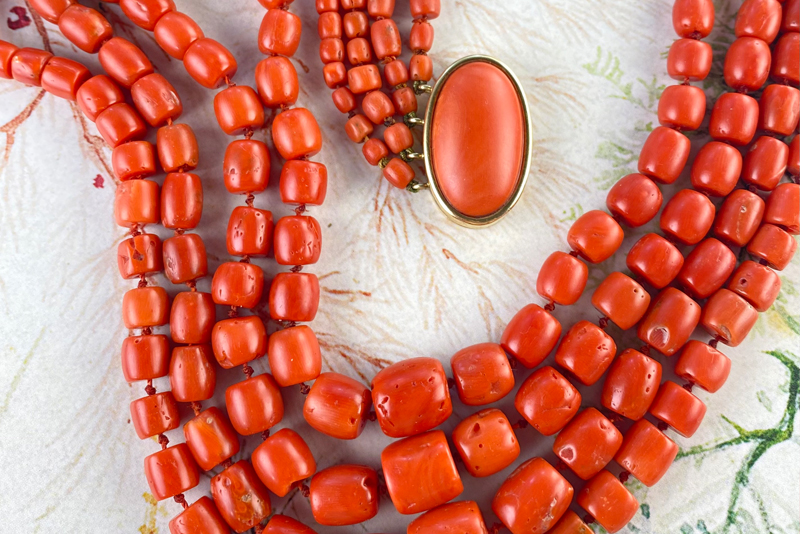
For coral necklaces, it is also advisable to check the thread used regularly, as this too can lose its strength over the years and become brittle.
To prevent your necklace from snapping unexpectedly, you should consider having it re-strung if you wear it frequently or if it is already an antique piece.
We’d be happy to carry out this service for you in our own workshop.