We all have a fixed image in mind when it comes to diamonds: a clear, radiant gemstone with a beautiful sparkle. Yet diamonds come in almost every colour! The spectrum ranges from virtually colourless to rare natural shades.
In this article, we’ll tell you about the world of diamond colours, how they’re graded and what really matters when choosing one.
An overview: colourless, tinted and fancy
Colour is one of the four key quality characteristics of a diamond and forms part of the so-called 4Cs – Colour, Cut, Clarity and Carat. It has a significant influence on how a stone is perceived visually.
Generally speaking, a distinction can be made between colourless diamonds, diamonds with a more or less faint hue of yellowish or brownish and naturally coloured diamonds, known as fancy diamonds.
From D to Z: international colour grades explained
An international system of colour designations is used for the objective assessment of diamond colour (colour grading). This system was developed by the Gemological Institute of America (GIA) and is now standard practice in gemmology.
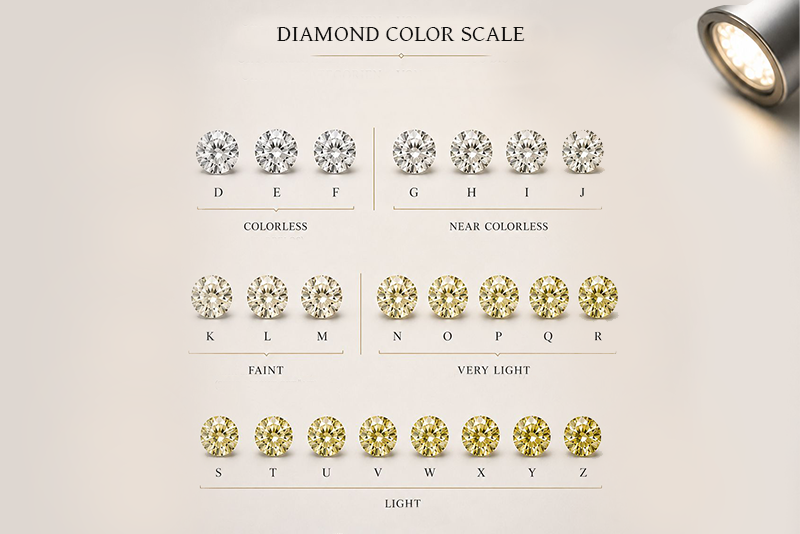
It ranges from colourless diamonds (D, E, F) through to near-colourless (G, H), slightly tinted (I, J) and tinted (K, L, M) diamonds, right up to stones with a distinct tint (N–Z). This colour scale is also referred to as the yellow series. The letters themselves have no intrinsic meaning, but serve solely for neutral classification.
Old terms such as River or Wesselton are no longer used today.
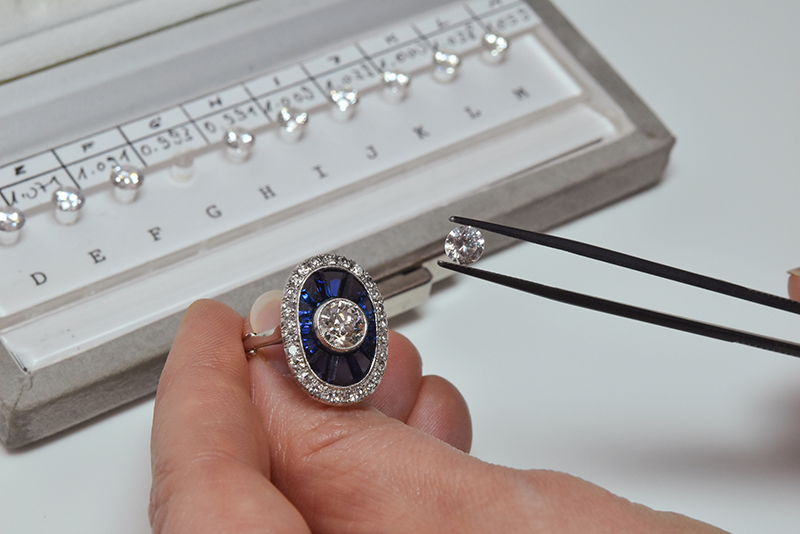
To the untrained eye, a warm hue only becomes discernible from around K onwards. Finer gradations within a range become visible to experts when directly compared with a set of reference diamonds under a standardised light source. The reference set should represent all colours of the yellow series.
Fancy Diamonds: natural coloured diamonds and their special characteristics
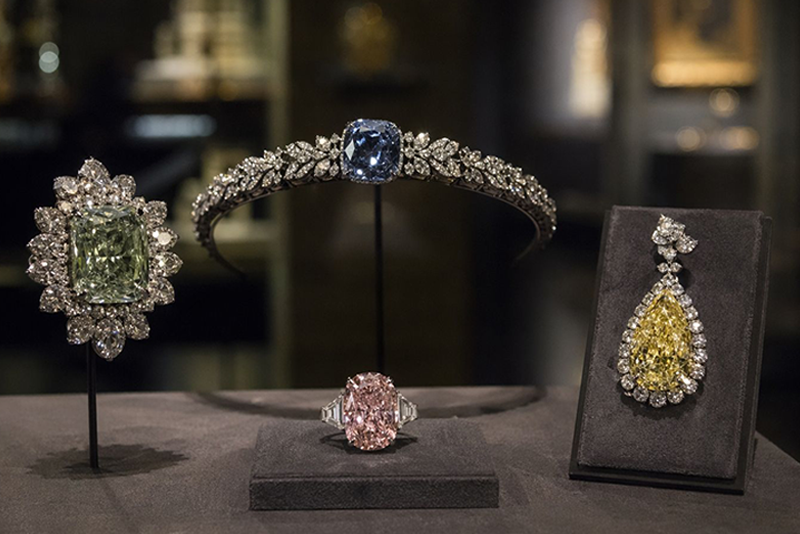
Diamonds whose colour extends beyond the Z range are referred to as fancy diamonds. In this context, ‘fancy’ does not mean fashionable, but naturally coloured.
Important: fancy diamonds are not to be confused with colour-treated diamonds!
Fancy colours include, amongst others, yellow, brown and black (relatively common), as well as green, blue and violet or pink (rare to extremely rare). Naturally red diamonds are among the rarest varieties of all.
The colour formation is geologically determined and is attributable to trace elements, physical and chemical characteristics or deformations in the crystal lattice, as well as natural radiation.
Natural vs. treated diamonds: transparency counts
Not every intense diamond colour is necessarily of natural origin. In jewellery practice, there are various treatment methods that can be used to alter or enhance the colour of a diamond retrospectively. These include, amongst others, HPHT treatments (High Pressure High Temperature) or irradiation.
Such treatments are permanent and must be disclosed. Transparency is crucial here. Certificates from independent laboratories document whether a colour is natural or has been altered subsequently, giving you peace of mind when purchasing.
Diamond colour in conjunction with cut, clarity and metal
The perceived colour of a diamond does not depend solely on the colour grade itself. Cut, stone size and setting also play a significant role. A very good cut can conceal slightly tinted colours.
Furthermore, the precious metal influences the overall effect: Warm diamond colours harmonise particularly well with yellow or rose gold, whilst colourless stones are often set in white gold or platinum to emphasise their cool brilliance. In jewellery, this interplay is deliberately designed and forms part of the overall aesthetic concept.
Selection by style, era and personal taste
Diamonds in the colourless to near-colourless range are considered classic. They have a timeless appeal and can be combined in many ways. In contrast, stones with a slight tint or natural fancy diamonds, which emphasise individuality, appear full of character.
When purchasing antique jewellery, it is important to note that the colour of a diamond was often overlooked in favour of its size. For centuries, owning a diamond at all was a privilege reserved for only a small section of the population. The colour of the stone was almost irrelevant in this context.
A comparison with modern standards therefore falls short here. With historical diamond jewellery, the overall effect – cut, design and age – can be more important than the perfect diamond colour.